
Claude Sonnet 4.5 Released: What WordPress Developers Need to Know
 Shock
ShockOctober 4, 2025 • 4 min read
 Anthropic released Claude Sonnet 4.5 on September 29, and WordPress developers are already testing its capabilities for real-world projects. This release brings substantial improvements to coding performance and context handling.
Core Improvements
Claude Sonnet 4.5 delivers three major upgrades over its predecessor:
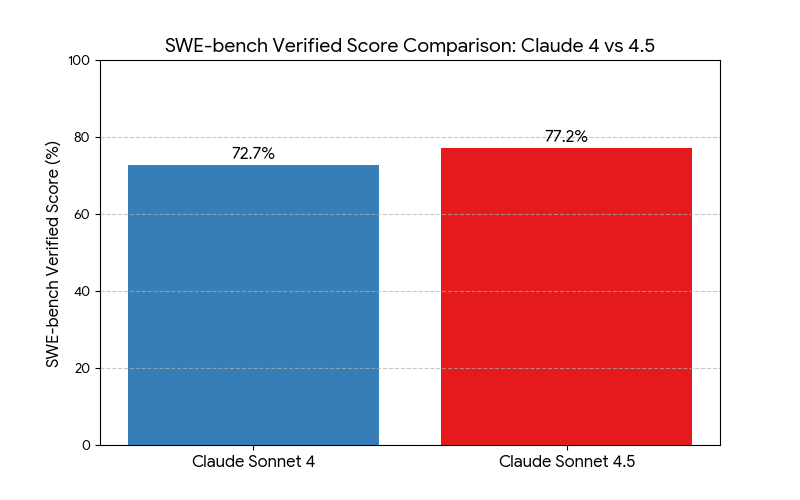
Coding Performance: The model now scores 82% on SWE-bench Verified, up from 49% in Claude Sonnet 4. This benchmark tests the ability to resolve real GitHub issues from popular open-source repositories.
Extended Context: The model maintains focus for 30+ hour development sessions, allowing developers to work on large codebases without losing context or requiring repeated explanations.
Pricing Stability: Input costs remain at $3 per million tokens, with output at $15 per million tokens—unchanged from Claude Sonnet 4.
GitHub Copilot integrated Claude Sonnet 4.5 on launch day, making it immediately available to developers using that platform.
Developer Feedback from the WordPress Community
WordPress developers have been documenting their experiences across social platforms and forums.
Reddit's WordPress community has highlighted specific improvements in pattern recognition for WordPress-specific code structures, accurate Gutenberg block generation with fewer syntax errors, and default adherence to WordPress Coding Standards.
Performance Metrics
| Capability | Claude Sonnet 4 | Claude Sonnet 4.5 | Change |
|---|---|---|---|
| SWE-bench Verified | 49% | 82% | +67% |
| Context Window | 200K tokens | 200K tokens | Unchanged |
| Processing Speed | Baseline | ~2x faster | Improved |
WordPress-Specific Use Cases
Block Development
The model generates React components and WordPress block API code with improved accuracy. Developers report fewer build errors and better alignment with Gutenberg's architectural patterns.
// Example: Claude-generated block registration
register_block_type('namespace/custom-block', [
    'api_version' => 2,
    'editor_script' => 'custom-block-editor',
    'editor_style' => 'custom-block-editor',
    'style' => 'custom-block',
    'render_callback' => 'render_custom_block',
    'attributes' => [
        'content' => [
            'type' => 'string',
            'default' => '',
        ],
        'alignment' => [
            'type' => 'string',
            'default' => 'left',
        ]
    ]
]);
Legacy Code Modernization
The extended context window allows Claude to analyze entire plugins or themes in a single session. This capability suits refactoring projects where understanding the full codebase structure matters.
Performance Optimization
Early testing suggests the model recognizes WordPress-specific performance patterns, including database query optimization and asset loading strategies.
Platform Migration
Development agencies report using Claude 4.5 for migration scripting, with generated code requiring less manual adjustment than previous versions.
Access Methods
Claude.ai: Available to Pro subscribers through the web interface
API Integration: Use the model string claude-sonnet-4-5-20250929 for API calls
GitHub Copilot: Select Claude from the model options in Copilot settings
Cloud Platforms: Available on Amazon Bedrock (US West region) and Google Vertex AI
Cost Estimates
Approximate costs for common WordPress development tasks:
- React component generation: ~$0.02
- Full plugin analysis and refactoring: $0.50-1.00
- Theme codebase review: ~$0.30
- Migration script creation: ~$0.75
These estimates assume average token usage for each task type.
Community Resources
The WordPress development community has created several resources:
WP Claude Prompts: A GitHub repository collecting WordPress-specific prompt templates for common development tasks
WordPress AI Discord: A dedicated channel for discussing AI tool implementation in WordPress projects
WP Tavern Tutorial Series: An upcoming educational series on AI-assisted WordPress development
Development Workflow Impact
The improved capabilities affect WordPress development in measurable ways:
Development Velocity: Complex implementations that previously required multiple days can often be completed in hours
Accessibility: Junior developers can reference the model for guidance on architectural decisions typically requiring senior expertise
Code Quality: AI-generated code frequently follows established best practices and coding standards
Resource Efficiency: Reduced development time translates to lower project costs
Known Limitations
Developers should be aware of current constraints:
- Generated code requires human review and testing
- The model cannot access private repositories or proprietary codebases
- Highly customized WordPress installations may not match the model's training data
- Security validation remains a human responsibility
- Complex business logic may require iterative refinement
WordPress Ecosystem Implications
WordPress powers [placeholder: current percentage] of websites globally. Improvements in AI-assisted development tools have broad implications for the ecosystem:
Small Team Capabilities: Smaller development teams can deliver sophisticated functionality previously requiring larger teams
Security Response: Faster identification and patching of security vulnerabilities
Performance Standards: More widespread implementation of performance best practices
Custom Development: Lower barriers to custom WordPress development for specific use cases